
The Lantern at the Evening Market
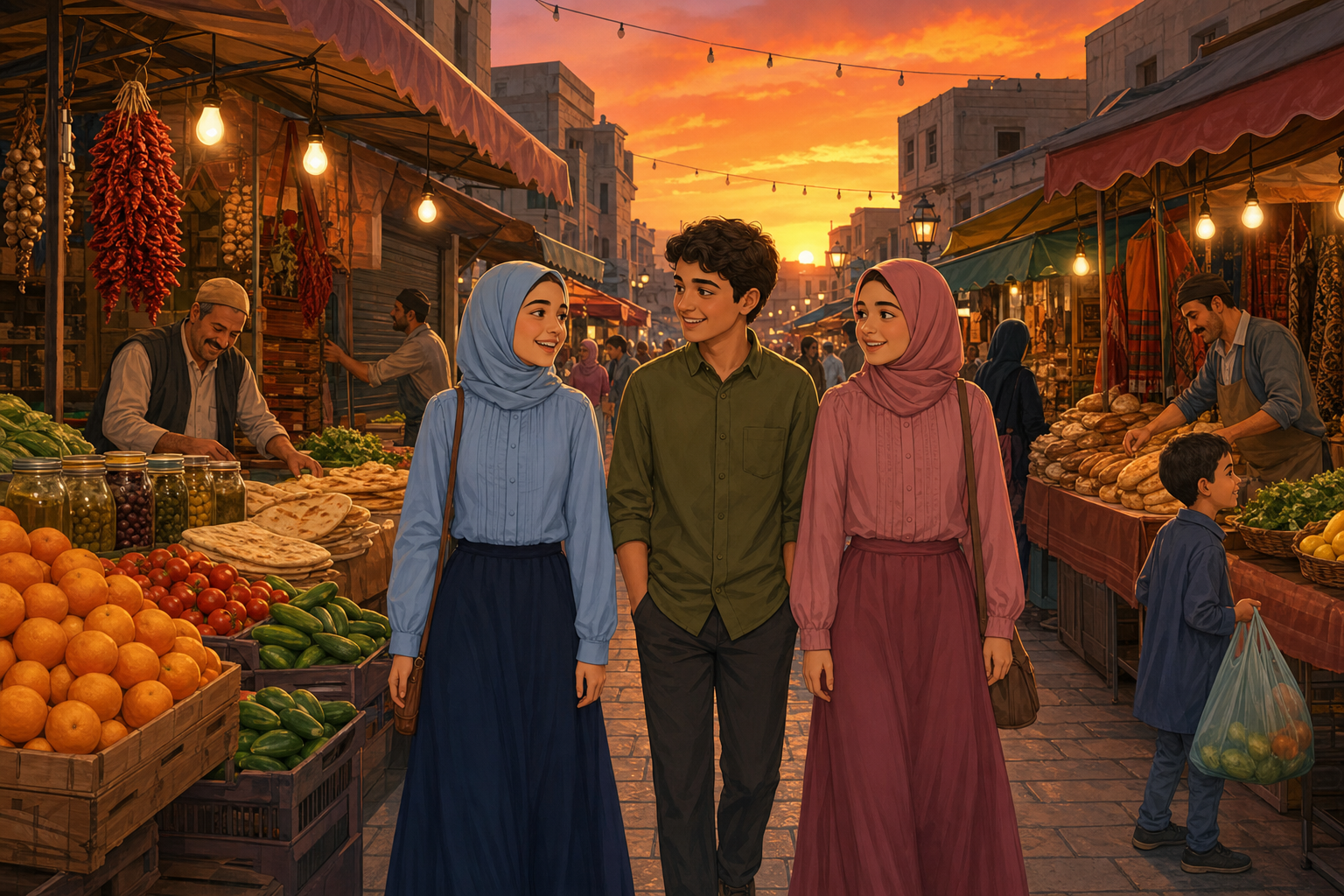
After school, Yara, Karim, and Hana did not go straight home.
They turned onto Saleh Street, where the evening market was waking up.
The air smelled of warm bread and cinnamon.
Small lamps were turning on above the shops.
“Look,” Yara said. “The souk is busy already.”
Karim pointed at a cart of oranges. “My uncle buys fruit here every Friday.”
Hana smiled. “I like the colors when the sun goes down.”
Shopkeepers were opening wooden shutters.
A man called out prices for tomatoes and cucumbers.
Children carried plastic bags for their mothers.
Yara waved at the baker’s son, who was stacking flatbread.
The street was noisy, but it felt friendly.
Karim said, “I am hungry.”
“Me too,” Hana said. “But we have homework.”
“We can walk slowly,” Yara said. “Just five more minutes.”
They passed a shop with jars of olives and pickles in the window.
Strings of dried peppers hung from the ceiling.
The sky turned deep orange behind the buildings.
What is not important
These details are noise. You can delete them and still understand this part:
- Smell of warm bread and cinnamon
- Karim’s uncle buys fruit every Friday
- Jars of olives, dried peppers, deep orange sky
- Baker’s son stacking flatbread
What is important
These details are signal. Keep them — they tell us what happened and how people spoke:
- Yara, Karim, and Hana walked through the busy evening market
- Karim said, “I am hungry,” but they still had homework
- Yara said they could walk slowly for five more minutes
Remove the noise — what happened?
One sentence only: After school, the three friends walked through the evening market instead of going straight home.
Talk about it
- What happened? — say it in one sentence.
- Noise or signal? — pick one detail from this part and explain your choice.
- How did they sound? — name one tone-of-voice clue from this part.
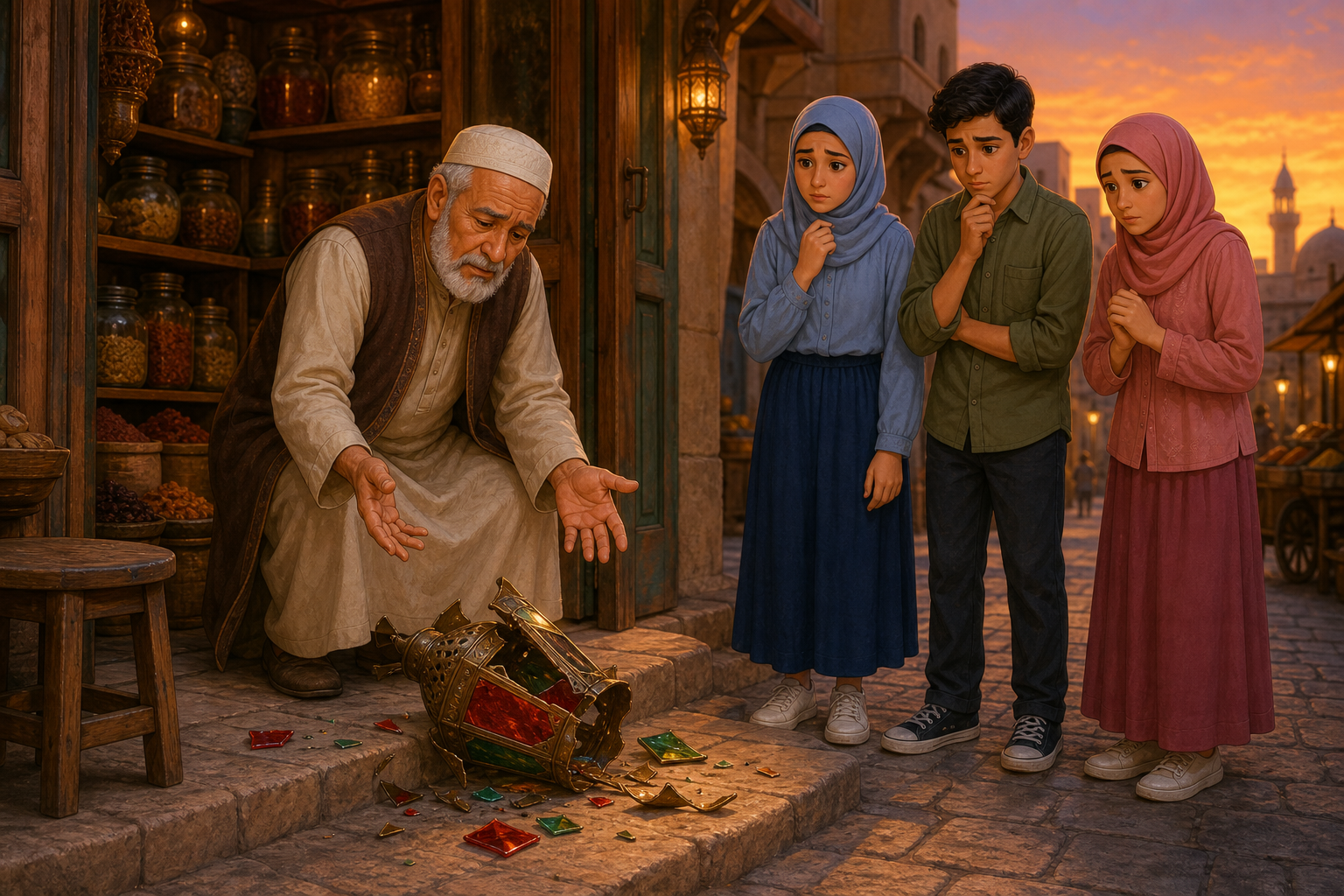
Near the end of the street was Abu Tariq’s spice shop.
Abu Tariq was an old man with a white beard and a kind voice.
He always greeted students on their way home.
“Marhaba, children,” he said today.
“Marhaba, Abu Tariq,” they answered together.
Above his door hung a brass lantern with colored glass.
It had been there for many years.
Abu Tariq reached up to light the lantern for the evening.
He stood on a small wooden stool.
His hand shook a little.
The stool wobbled.
The lantern slipped from its hook.
“Careful!” Yara shouted.
The lantern hit the stone step and broke.
Colored glass scattered across the ground.
Abu Tariq’s shoulders dropped.
“Oh no,” he whispered. “Not this one.”
Karim froze. Hana covered her mouth.
For a moment, the busy street felt very quiet.
Abu Tariq climbed down slowly.
“I am fine,” he said. “But the lantern is not.”
What is not important
These details are noise. You can delete them and still understand this part:
- Brass lantern with colored glass above the door
- Abu Tariq stood on a small wooden stool
- Colored glass scattered across the ground
What is important
These details are signal. Keep them — they tell us what happened and how people spoke:
- Abu Tariq greeted them with a kind voice: “Marhaba, children”
- Yara shouted, “Careful!” when the stool wobbled
- Abu Tariq whispered, “Oh no. Not this one.”
- He said calmly, “I am fine, but the lantern is not.”
Remove the noise — what happened?
One sentence only: Abu Tariq’s lantern fell and broke while he tried to light it above his spice shop.
Talk about it
- What happened? — say it in one sentence.
- Noise or signal? — pick one detail from this part and explain your choice.
- How did they sound? — name one tone-of-voice clue from this part.
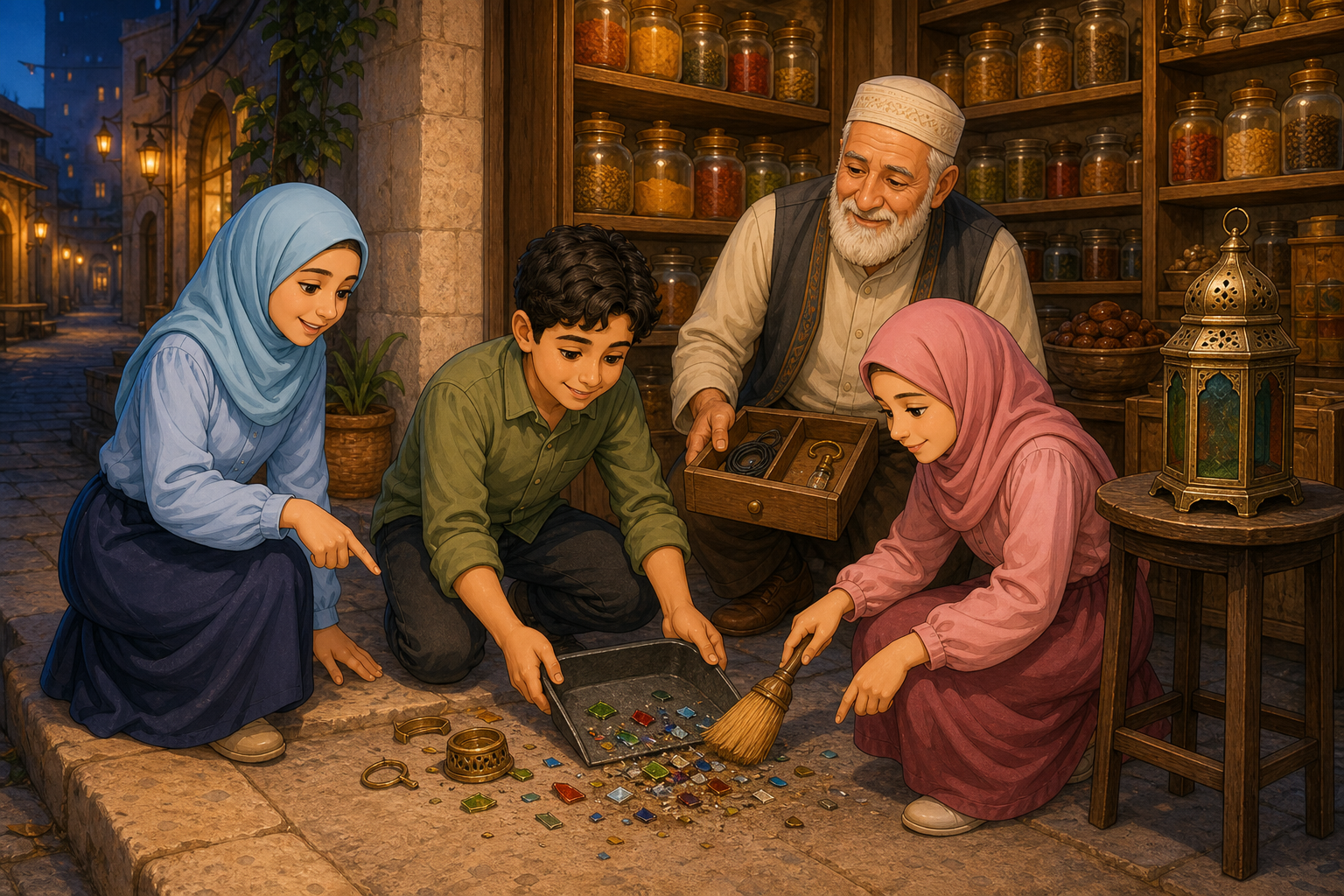
Yara knelt down. “We can help.”
“We should not touch glass,” Hana said.
“You are right,” Yara said. “Abu Tariq, do you have a broom?”
Abu Tariq nodded and brought a short broom from inside.
Karim held the dustpan steady.
Hana swept the small pieces into it carefully.
Yara kept her hands away from the sharp edges.
A few people stopped to look, then walked on.
When the step was clean, Abu Tariq opened a drawer under the counter.
Inside were spare bulbs, wire, and old hooks.
“I saved these,” he said. “But I cannot climb alone tonight.”
Karim looked at the stool. “I can hold the stool for you.”
“I am strong,” he added.
Abu Tariq laughed softly. “Then we work together.”
He chose a new hook and a small bulb.
Karim pressed both hands on the stool legs.
Yara watched the wire.
Hana carried the pieces of glass to a metal bin behind the shop.
Abu Tariq climbed up again, slowly this time.
He fixed the hook and clicked the bulb into place.
“Is it safe?” Hana asked.
“Almost,” Abu Tariq said. “One more turn.”
He tightened the hook and stepped down.
What is not important
These details are noise. You can delete them and still understand this part:
- Spare bulbs, wire, and old hooks in a drawer
- A few people stopped to look, then walked on
- Karim said, “I am strong”
What is important
These details are signal. Keep them — they tell us what happened and how people spoke:
- Hana said, “We should not touch glass”
- Yara asked for a broom; Karim held the dustpan
- Abu Tariq laughed softly: “Then we work together.”
- Hana asked, “Is it safe?” and Abu Tariq answered, “Almost.”
Remove the noise — what happened?
One sentence only: The children helped Abu Tariq sweep the glass and hold the stool while he fixed the lantern hook.
Talk about it
- What happened? — say it in one sentence.
- Noise or signal? — pick one detail from this part and explain your choice.
- How did they sound? — name one tone-of-voice clue from this part.
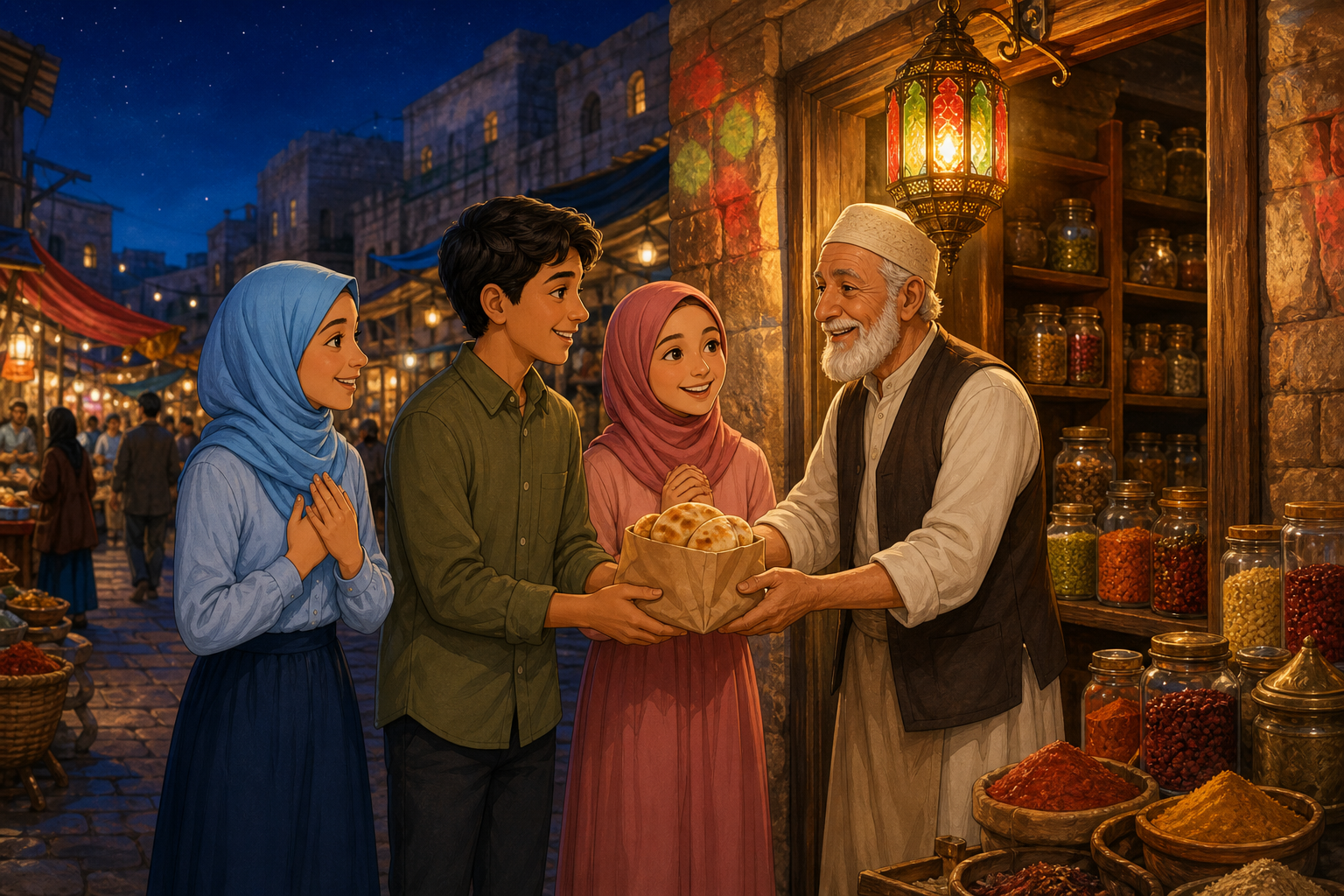
Abu Tariq switched on the lantern.
Warm yellow light spilled over the spice jars.
The colored glass made small red and green shapes on the wall.
“Beautiful,” Hana said.
“It is not the same lantern,” Abu Tariq said. “But the light is back.”
He looked at the three friends.
“You did not run away. You stayed and helped.”
Yara felt proud but shy.
“We live nearby,” Karim said. “It was the right thing.”
Abu Tariq went to the back room and returned with a paper bag.
Inside were three small pieces of warm bread.
“For hungry students,” he said.
They thanked him and said goodbye.
Outside, the market sounds returned.
Yara bit into her bread. “That was better than finding something mysterious.”
Karim laughed. “No box. No envelope. Just help.”
Hana nodded. “And we did not wait for an adult to do everything.”
They walked toward home under the darkening sky.
The lantern behind them glowed above the spice shop door.
Yara said, “Tomorrow we can tell our class what teamwork means.”
Karim added, “And what the souk smells like at sunset.”
Hana smiled. “And that Abu Tariq makes the best bread on Saleh Street.”
What is not important
These details are noise. You can delete them and still understand this part:
- Colored glass made red and green shapes on the wall
- Market sounds returned outside
- Karim joked about no box or envelope this time
What is important
These details are signal. Keep them — they tell us what happened and how people spoke:
- Abu Tariq said, “You did not run away. You stayed and helped.”
- Hana said softly, “Beautiful,” when the light returned
- Abu Tariq gave them warm bread: “For hungry students”
- They walked home proud of helping, not finding a mystery
Remove the noise — what happened?
One sentence only: With the lantern lit again, Abu Tariq thanked the children and gave them bread for staying to help.
Talk about it
- What happened? — say it in one sentence.
- Noise or signal? — pick one detail from this part and explain your choice.
- How did they sound? — name one tone-of-voice clue from this part.